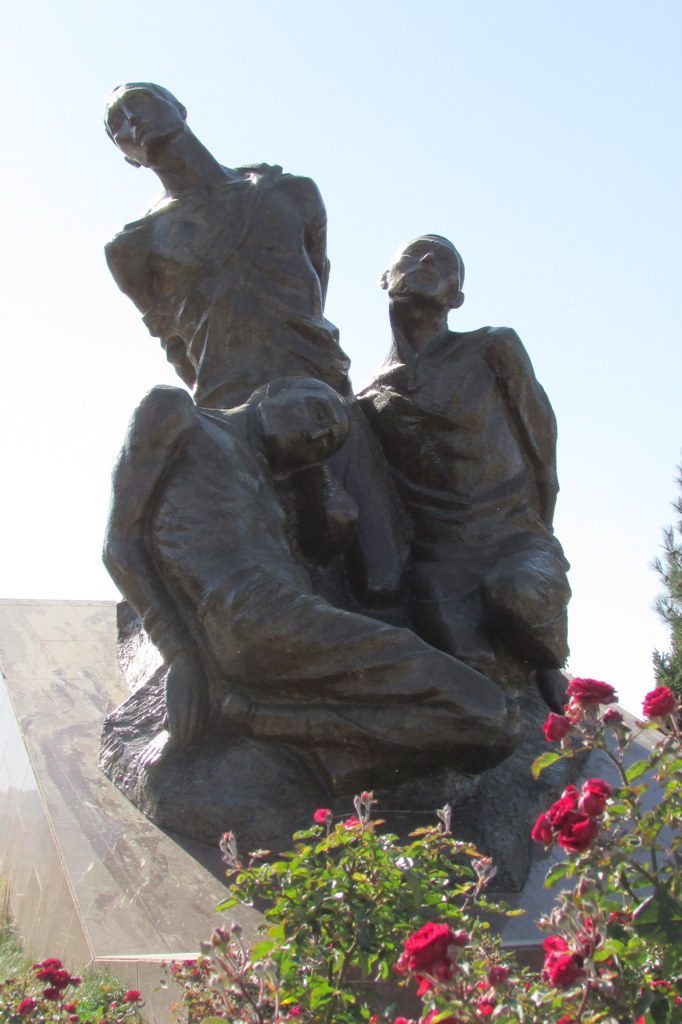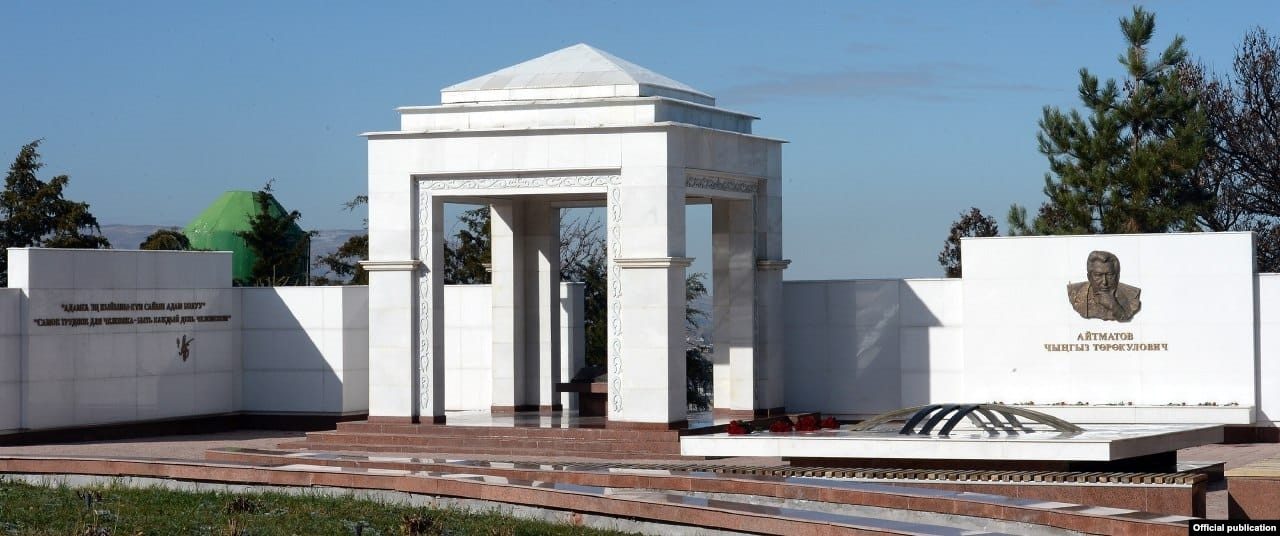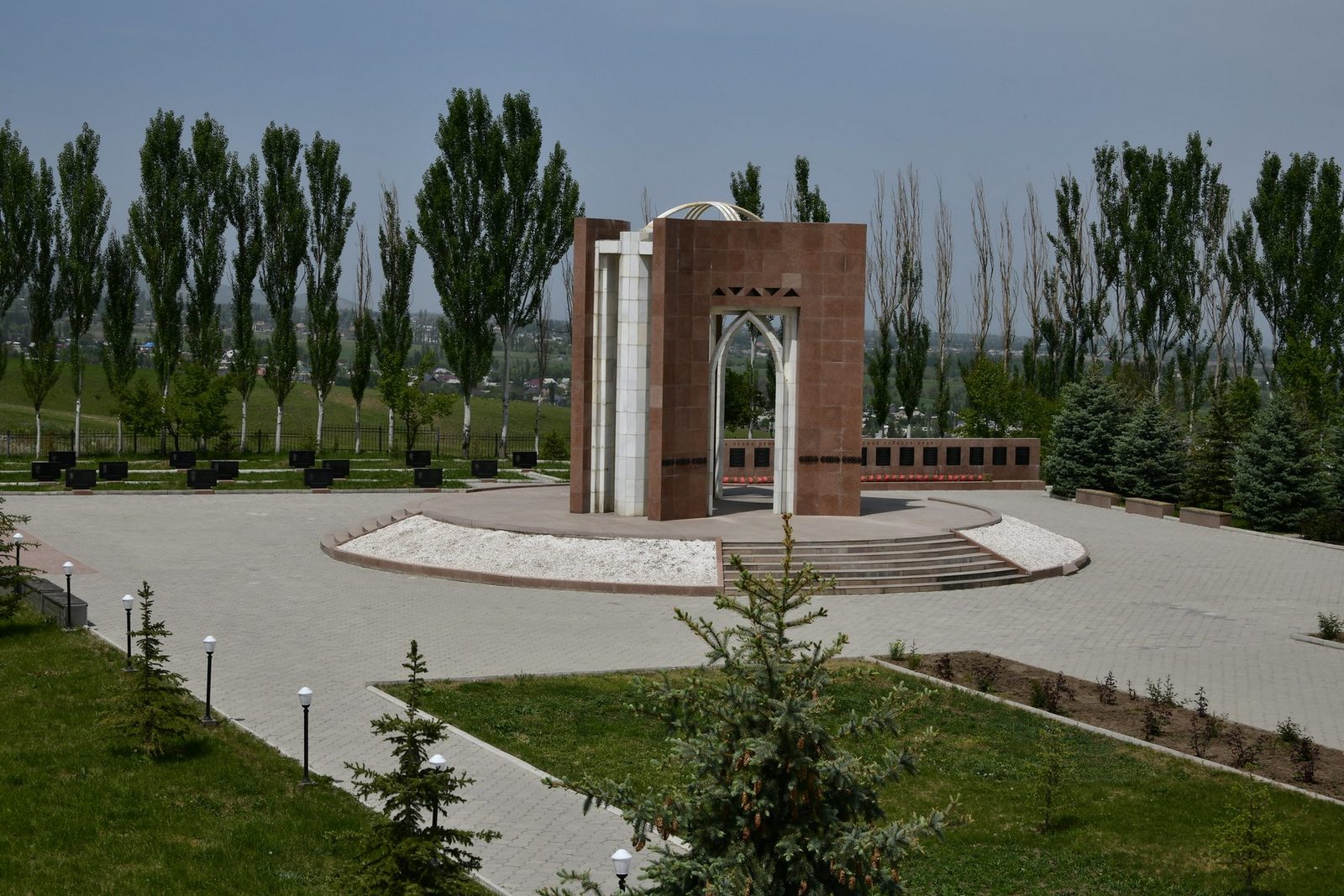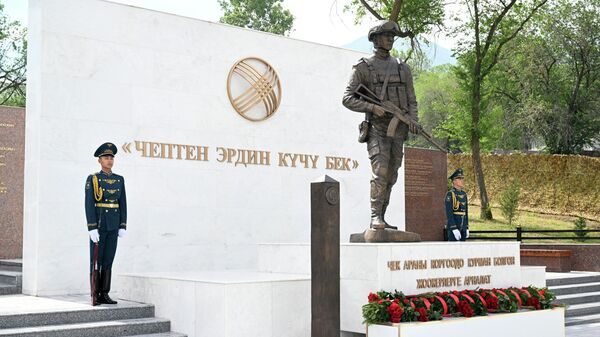
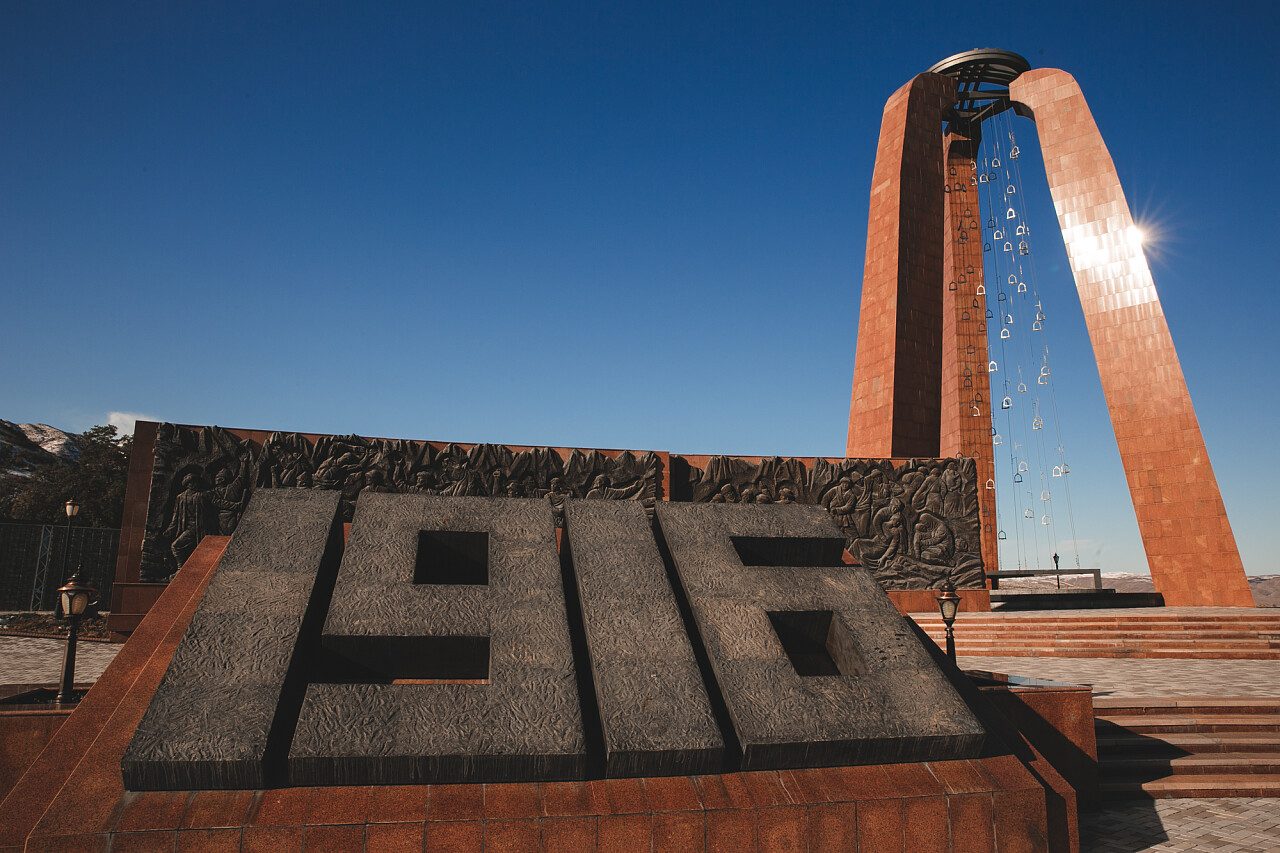
On September 2, 2016, a memorial to those who died in 1916 was opened at the Ata-Beyit National Historical Memorial Complex. One hundred years after the tragic events of 1916, a memorial was opened to the memory of those who died during the national liberation uprising. The memory of the greatest tragedy that went down in history as the “Urkun” and which took the lives of hundreds of thousands.
The Ürkün memorial
One hundred years have passed, but the memory of what happened to our people still lives in every Kyrgyz family.
The memorial of memory personifies grief for the victims. Empty stirrups are a symbol of the dead horsemen, all those who gave their lives for freedom and justice. The sounds they make are an echo of that big tragedy. These are the voices of those who fled from the suppressors, died at high mountain passes, starved and suffered humiliation in a foreign land ... Thousands and thousands of lives interrupted in that year ... Thousands and thousands of dead children, women and old people ...
At the same time, the memorial symbolizes the people's desire for independence and carries a positive message of freedom, won at the cost of enormous sacrifice and deprivation.
The uprising of 1916
In the XIX century, most Kyrgyz voluntarily accepted Russian citizenship. The uprising began in August 1916. As is known, the decree of June 25, 1916 on the forced mobilization of the male population of the Turkestan Territory to the rear works served as the immediate reason for the uprising. And after the shooting by police in the city of Hojent on July 4, 1916, people who did not agree with the lists of mobilized, the unrest spread to the whole territory of the Turkestan region. In early July, on the ground, both the settled agricultural and nomadic people of the region were also held meetings where decisions were made not to obey this order. The unrest in places turned into open disobedience of the colonial power, to the seizure of local administrative institutions, the destruction of the lists mobilized, clashes with police and troops, which were accompanied by injuries and casualties on both sides. The scale and activity of these unrest even led to a temporary loss of telegraphic communication between the Turkestan region and the European part of the Russian Empire.
The difficult situation in the region forced the colonial power to declare martial law in the Turkestan military district on July 17, 1916. The situation in areas with a nomadic population was rather difficult in suppressing the “insurgents”. Especially in the Semirechensk area. The nomadic population was distinguished by greater mobility, quickly changing its location.
Initially, the colonial government used cadre troops, police forces, Cossack troops and armed settlers stationed in the territory of the Turkestan region itself to carry out punitive measures and suppress the popular masses. Therefore, as early as the beginning of August 1916, the military governor of the Turkestan Territory, General M.A. Folbaum, asked the command to send more troops, arguing that "the situation could suddenly change in such a way that the whole Russian business would collapse in Semirechye." The reinforcements came from the territories of Russia bordering Turkestan, mainly from Siberia. Military units were commanded by people with combat experience.
As is known, at this time Russia was conducting heavy military operations for it in the west, participating with its allies in the bloc in the First World War, which cannot be called successful. The war demanded huge material, human, financial resources. The mobilization of the male population to the front bare the rear of a huge empire.
At factories, in the village there was an acute shortage of workers. The loss of the breadwinners on the fronts of the world war, the difficult economic situation in the country, the active spread of revolutionary theories created the basis for a social explosion and the destruction of state power and a huge empire in Russia itself. It was the idea of mobilizing the male population of Turkestan to work in the rear that, according to the organizers, was to some extent to solve the shortage of workers in the rear and help stabilize the Russian economy. However, as a result of the events in Turkestan, it was possible to mobilize a little more than 100 thousand people for rear work instead of the estimated 480 thousand.
By the middle of August 1916, relying on well-trained and armed to the teeth regular foot and equestrian troops, the Cossack detachments with machine guns and artillery together with volunteers from among the Russian settlers managed to suppress and localize the main centers of the uprising. Part of the rebel Kyrgyz in Semirechye, together with their families and nomadic farms, fled to the mountains, but there, blocking the mountain passes, the sent punitive detachments pursued people, killing everyone.
The rebels of the Kyrgyz were armed with a wide variety of weapons, they were mostly forks and axes, impaled on long sticks, old flint wick guns, and some of the rebels had Russian captured guns captured during the fighting.
The rebels, as a rule, moved their families and with the economy, had no idea about military science, were not organized. Therefore, they could not stand up against well-armed, trained and organized punitive troops, even sometimes having numerical superiority several times. The victims were from both sides, but the losses of the rebels were immensely large.
The martial law courts, which were created during the punitive detachments, handed down death sentences to revolted or suspected indigenous people.
The confrontation of the warring parties took place with the use of excessive cruelty on both sides against each other, without any moral restrictions.
From the height of the past 100 years, on a historical scale, it becomes obvious that the tragedy of 1916 was the logical outcome of the centuries-old process of civil strife, internal strife, and lack of unity. It was one of the most critical moments in the history of Kyrgyzstan.
It was a really amazing story of rebirth from the ashes. The story of how people were able to get together after such a terrible tragedy and go a long way of economic and socio-cultural development.
Authors of the memorial and day of remembrance
The authors of the memorial for national liberation revolt Urkun-100 Years are laureates of Toktogul State Prize architects Ulanbek Beishenbaev, Muratbek Beishenbaev, Mirbek Beishenbaev.
To revere the memory of those who fell victims in the 1916 national liberation revolt the greatest tragedy that came to be seen as Urkun in 2016 on September 2nd the memorial Urkun was unveiled.
By the decision of Jogorku Kenesh of the Kyrgyz Republic dated April 18, 2008 the first Friday of August is declared the Day for the Remembrance of the Victims of 1916 National Liberation Revolt.