
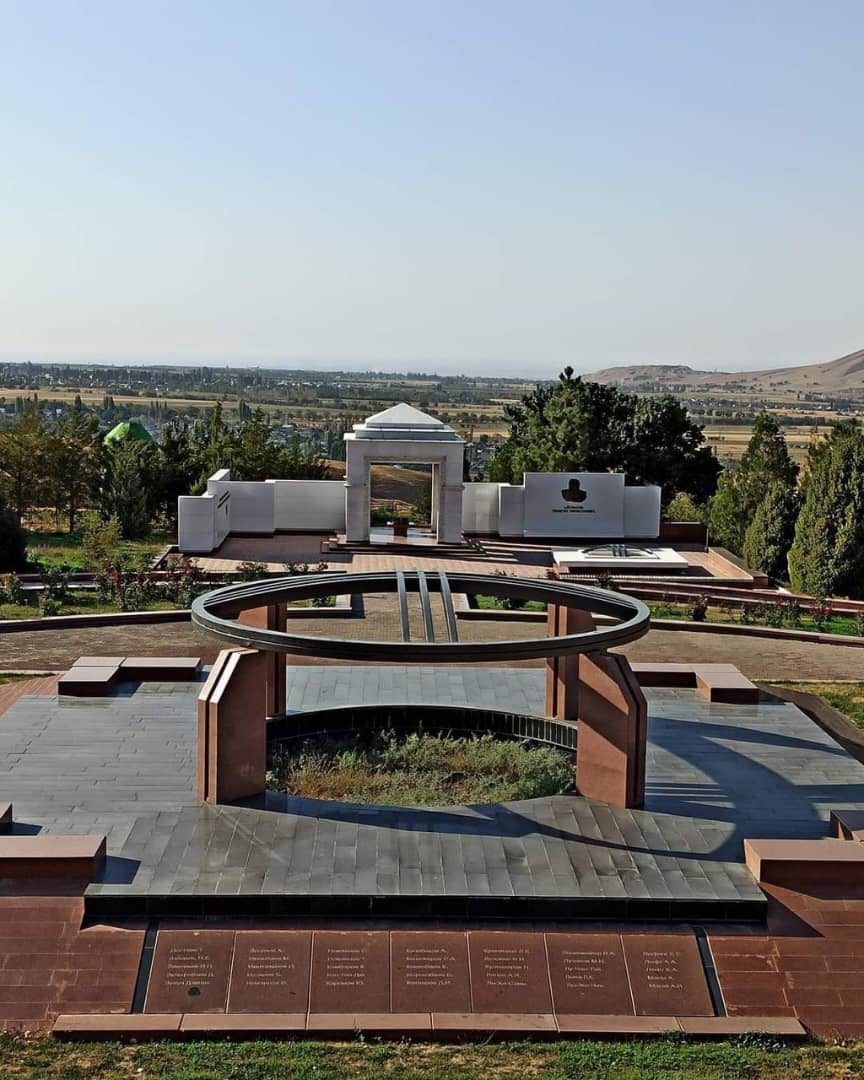
The secret of Ata-Beyit
Ata-Beyit, one of the CIS countries' most notable burial sites for victims of repression, was discovered and documented with substantial evidence. According to many historians, nearly 40,000 people from Kyrgyzstan were victims of Stalinist repression in 1937-38. However, research by Bolot Abdrakhmanov, based on verified archival data, puts the total number of repressed individuals at around 18,000, though further clarification is still needed.
In 1991, the burial site of 137 people executed in 1938 for being “nationalist enemies of the people” was discovered. Bubbuiira Kydyralieva kept her father’s last wish secret for half a century, and after Kyrgyzstan gained independence, she revealed the secret of Ata-Beyit to the relevant authorities.
“My father, when he was ill, remembered the old story and specifically told me this as his will. He knew he was about to pass away. ‘Daughter, on the hill where that foul smell comes from and where a glow can be seen at night, the cream of the Kyrgyz nation is buried. If a better time comes, tell this, daughter. Their relatives must be grieving,’ my father said,” recalls Bubbuiira. When they dug the site, they found the first skull at a depth of just 30-40 cm. The most convincing evidence was the “Notice of Execution Sentence” found during the excavation.
The remains were reburied, and the place was named Ata-Beyit. Among the discovered remains was the father of the famous writer Chingiz Aitmatov, Törökul Aitmatov. It was the writer who suggested the name “Ata-Beyit.”
“The remains of the executed were thrown haphazardly on top of each other. The bullet holes in the skulls were the first piece of evidence,” said Dr. Bolot Abdrakhmanov, Doctor of Historical Sciences and honorary colonel of the National Security Committee, who led the excavation of the 137 bodies.
Historians suggest that there may be dozens of similar undiscovered sites across Kyrgyzstan, requiring further excavation, identification, and research.